
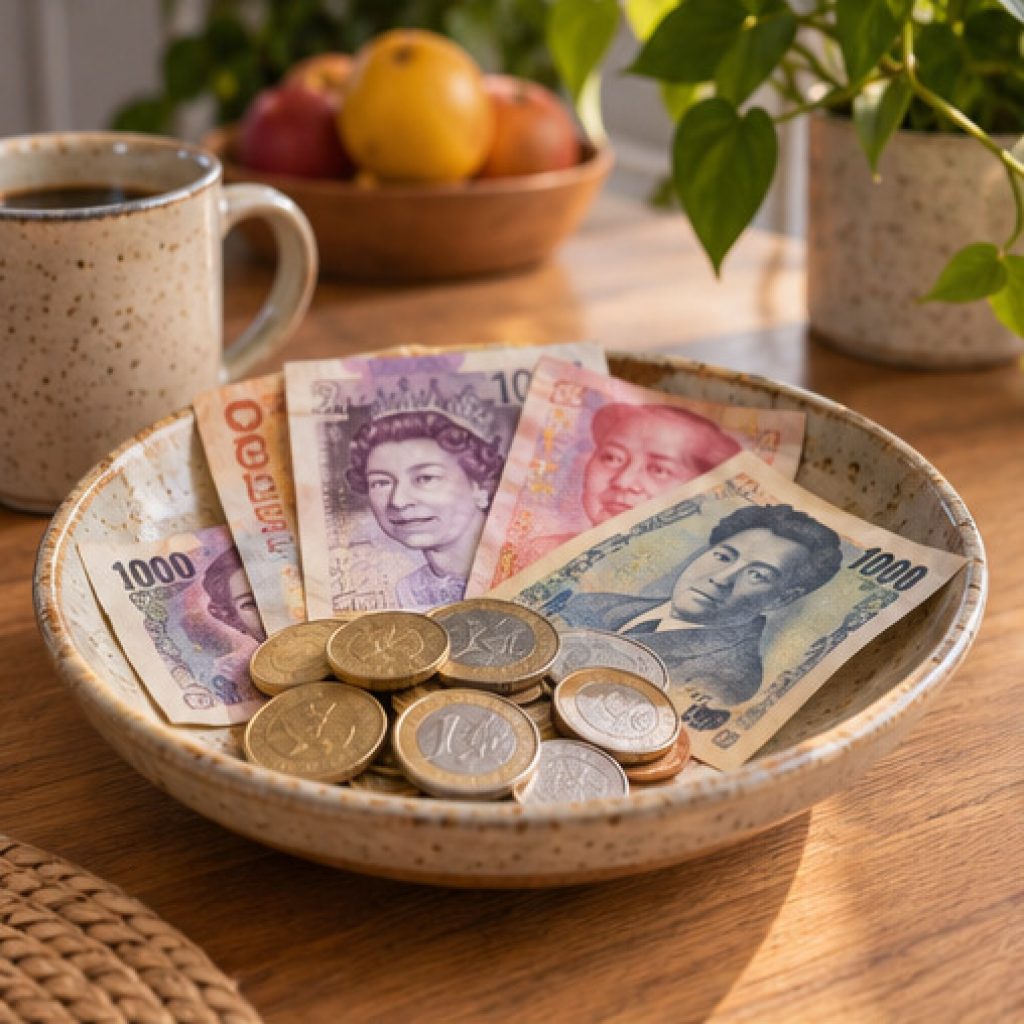
You unpack after a trip and find US$80 in notes, €35 in notes, and a handful of coins beneath a luggage tag. Before driving to a currency exchange in Windsor, spend five minutes sorting the money. The three piles are three different questions. What will a counter pay for the US notes? Which euro notes can it accept? Is there a practical outlet for the coins? A single online conversion of the whole pile cannot answer any of them.
CanAm handles physical cash exchanges at 3854 Dougall Avenue in Windsor. For a buyback enquiry, call 519-915-5151 with the currencies, denominations, condition, and amounts. The branch can discuss what it can quote and what it needs to inspect. Acceptance of a particular series, damaged note, or coin needs confirmation before you count its value toward your Canadian payout. CanAm cash service · Windsor contact information
What should I sort before calling?
Use a clear surface, empty the coin purse completely, and group the notes by issuing currency. A dollar sign appears on money from several countries. A portrait, familiar colour, or reference to a dollar is weaker evidence than the currency name and issuer printed on the note. If you cannot identify one item, set it aside and describe it separately. It is better to get a reliable quote for the identified pile than an inaccurate quote for the entire wallet.
Within each pile, count the notes by face value. Four US twenties make US$80. A euro twenty, a ten, and a five make €35. List the coins separately even if they carry the same currency symbol as the notes. Write down anything unusual, such as an older design, a torn edge, a stain, or a missing corner. Keep the original pieces together if a note has separated. Avoid trying to improve its appearance before asking for advice.
| What you found | What to tell the counter | What to confirm |
|---|---|---|
| Four US$20 banknotes | US$80, with any visible condition issues | Total CAD payout for the accepted notes |
| One €20, one €10, one €5 | €35 across three denominations | Whether each note can be included |
| Foreign coins | Currency and approximate face value, tallied separately | Whether the branch accepts those coins |
| An unfamiliar or damaged note | Issuer, denomination, series if visible, and condition | Whether inspection is useful and who handles redemption |
What determines how much CAD I can take home?
Three things matter immediately. How much foreign cash is accepted, what buy rate applies to each currency, and which fees apply to the transaction? Use a separate calculation for each currency because one US dollar and one euro are different units. Add the results only after expressing them both in Canadian dollars. If the dealer deducts a single transaction fee, subtract it once at the end.
For a fictional example, suppose all four US notes are accepted at CAD$1.35 per USD and all three euro notes at CAD$1.50 per EUR. The US pile contributes CAD$108.00. The euro pile contributes CAD$52.50. Together they produce CAD$160.50 before any fee. The coins are outside the calculation because no offer has been made for them. These example rates are for arithmetic and do not represent a current quote from CanAm.
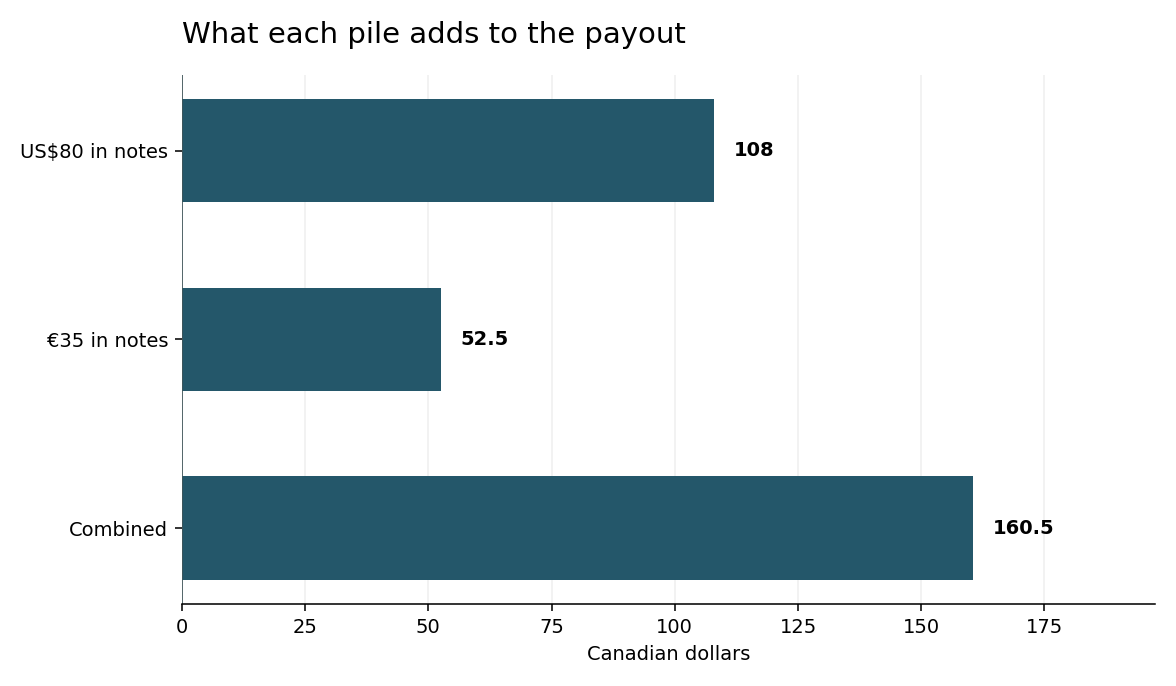
Now change just one assumption. If the €20 note needs review and only €15 is accepted immediately, the euro component falls to CAD$22.50. Your immediate total becomes CAD$130.50 before fees. The difference is CAD$30, the illustrative value of the note still in your possession. It has not been charged as a fee. Keeping an inventory makes that distinction clear when you compare the cash in your hand with the original estimate.
Which banknotes can I sell back?
Start with a question narrow enough for the branch to answer. “Can you quote four circulating US twenties in good condition?” is more useful than “Do you take foreign money?” Follow it with your euro denominations and ask whether the same transaction can include both currencies. Even if you bought your travel cash at CanAm, ask for today’s buy terms. Selling the notes back is a new exchange in the opposite direction.
A currency’s legal status in its home market is separate from a particular dealer’s ability to accept it in Windsor. For example, the European Central Bank explains the two series of euro notes and the status of the €500 denomination. That information can help you identify a note. It cannot promise that a Canadian retail counter will buy that note or that a shop abroad will have change for it. European Central Bank banknote guide
When a design looks unfamiliar, record the exact words and denomination. If the currency was replaced or the issuing country changed its notes, look up the issuing central bank’s published redemption instructions. Check whether the instructions apply to that exact issue, whether a deadline exists, and how claims must be made. Calculate the cost of the process before deciding to pursue it. Mailing or travel expenses can exceed the face value of a small leftover note.
What should I do with the coins?
Keep coins out of the banknote subtotal unless the counter confirms it can accept specific pieces. Saying that you have “about forty euros” when thirty-five are in notes and the rest in coins can produce an estimate you cannot collect. Instead, quote the €35 in banknotes and ask separately about the remaining coins. If the answer is no, the quote on the notes remains usable.
If you expect to return, store identified coins in a labelled bag with the total and date counted. Small denominations can be handy on a future trip, subject to the payment methods then in use. If you prefer to donate them, ask the charity or collection point which foreign coins it accepts before travelling there. A donation box intended for local cash may have no route to process a bag of mixed foreign coins.
Occasionally a traveller inherits a small tin of money rather than returning with recent change. Keep potentially collectible pieces separate from ordinary travel cash until you have identified them. A currency dealer’s exchange value and a collector’s valuation answer different questions. Avoid polishing an unusual piece to make it more presentable. Record what is visible and decide whether the potential value warrants a specialist opinion.
Is it worth making a separate trip to sell the notes?
Think in Canadian dollars after costs. If two offers for a small euro balance differ by CAD$1.25, the difference might disappear in the cost of an extra errand. If the counter is already on your route down Dougall Avenue, a modest payout can be worth collecting. Ask about business hours and whether any part of the order needs inspection before committing to the trip. Windsor branch hours and directions
There is another option if only one currency is likely to be useful again. A Windsor resident with another Detroit visit planned may keep the US twenties and sell the euros. In the example above, the relevant quote then becomes CAD$52.50 before any applicable fees. Ask for a fresh total on the euro-only transaction. A minimum fee or transaction-dependent rate could mean the euro-only offer differs from simply subtracting the USD component.
For money shared among several travellers, separate ownership before handing notes across the counter. If one person owns the US notes and another owns the euros, each person’s share follows the CAD value of their own accepted currency. Decide how you will allocate any common fee. Splitting the final payout fifty-fifty can be unfair even when both travellers contributed the same number of bills.
Questions about leftover currency
Will I get back the Canadian dollars I originally spent?
The original purchase and today’s sale occur on opposite sides of a retail exchange. The market may also have moved, and the amount you bring back is often much smaller. Use your old receipt to identify what you bought or to check an explicit written buyback arrangement. For an ordinary sale, make the decision using the net Canadian payout available today.
Can the branch guarantee acceptance from a photo?
Ask which details are useful before sending anything. A description or image may help identify the currency or series, while a teller may still need the physical note to assess its condition. If you have several notes, ask whether the clearly identified ones can be exchanged even if one piece requires further review. Keep uncertain items separate so they are easy to return to you.
What if the notes are damp or torn?
Describe the condition honestly and avoid more handling than necessary. Ask the counter whether it can inspect that currency in that condition. If it cannot, look up the issuing authority’s damaged-currency procedure and eligibility requirements. A process for damaged Canadian notes does not automatically cover a US dollar or euro note damaged in Canada.
What should my receipt and final count show?
You want to be able to reconstruct which amounts you sold, how many Canadian dollars you received, and which items came home with you. Check the transaction detail before leaving. Make a note of any retained or declined pieces on your personal inventory. Back at home, label those pieces with the next action, whether that is saving them for a trip, contacting the issuer, or arranging an appraisal.
What is the fastest way to get an answer in Windsor?
Call 519-915-5151 with a short inventory and ask for the Canadian payout on the notes the counter can quote. Mention the coins and unusual pieces separately. That gives the team the information it needs and gives you something more useful than a rough conversion of everything on the kitchen table. Contact CanAm in Windsor